To ORDER in Pakistan Softcover copy (POD)...
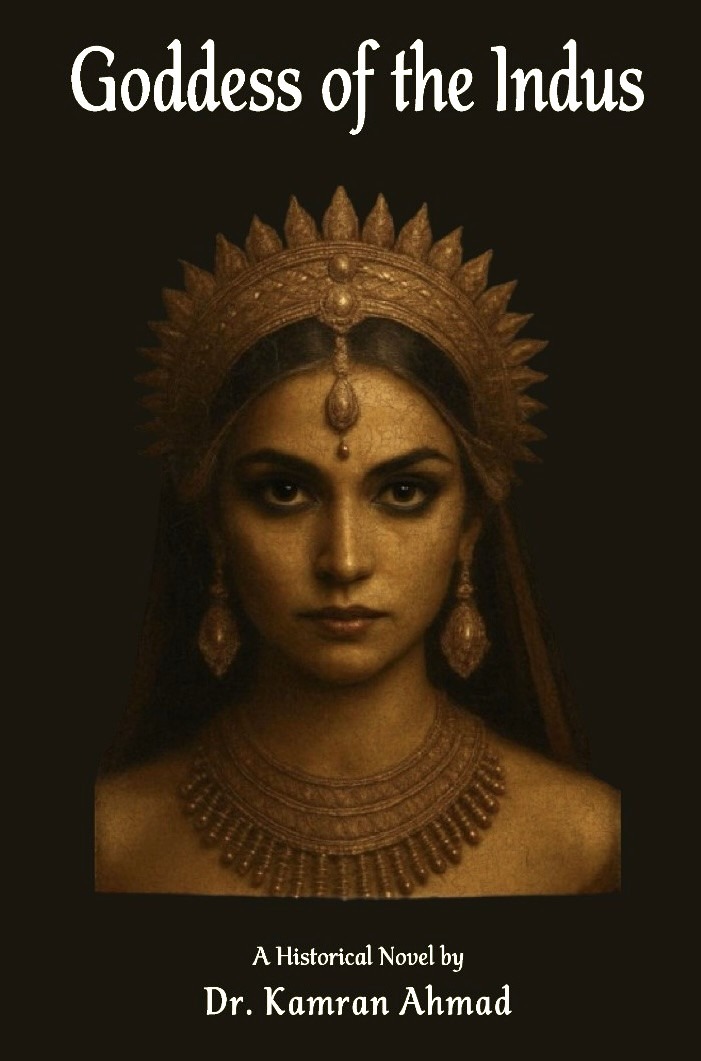
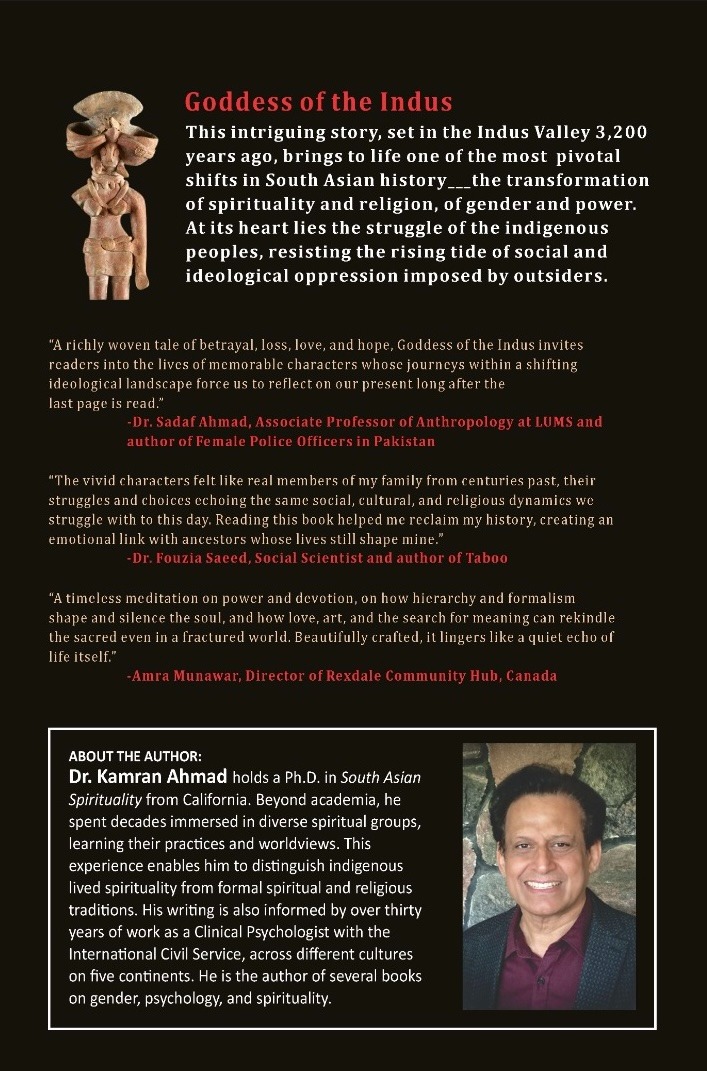
This intriguing story, set in the Indus Valley 3200 years ago, brings to life one of the most pivotal shifts in South Asian history—the transformation of spirituality, religion, and power. At its heart lies the struggle of the indigenous peoples, resisting the rising tide of social and ideological oppression imposed by outsiders.
A MUST-READ for those interested in:
· The Relationship between Religion and Spirituality
· Pre-Aryan Goddess Traditions of South Asia
· Gender and Sacred Sexuality
· How Brahmins shaped Racial and Caste Hierarchies
· South Asian Cultures and History
“A richly woven tale of betrayal, loss, love, and hope, Goddess of the Indus invites readers into the lives of memorable characters whose journeys within a shifting ideological landscape force us to reflect on our present long after the last page is read.”
—Dr. Sadaf Ahmad, Associate Professor of Anthropology at LUMS and author of Female Police Officers in Pakistan and Transforming Faith
“The vivid characters felt like real members of my family from centuries past, their struggles and choices echoing the same social, cultural, and religious dynamics we struggle with to this day. Reading this book helped me reclaim my history, creating an emotional link with ancestors whose lives still shape mine.”
—Dr. Fouzia Saeed, Social Scientist and author of Taboo
“A timeless meditation on power and devotion, on how hierarchy and formalism shape and silence the soul, and how love, art, and the search for meaning can rekindle the sacred even in a fractured world. Beautifully crafted, it lingers like a quiet echo of life itself.”
—Amra Munawar, Director of Rexdale Community Hub, Canada
To ORDER Globally e-book, soft cover, hard cover, audiobook...
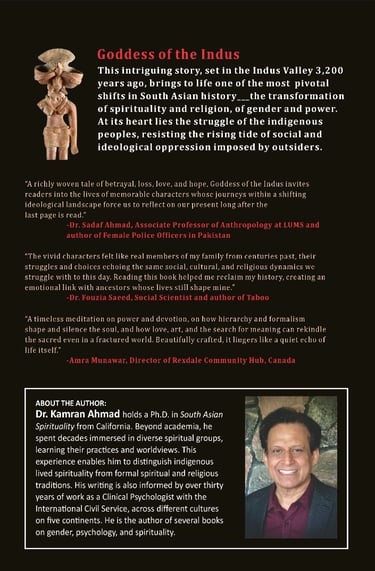
Goddess of the Indus
A Historical Novel
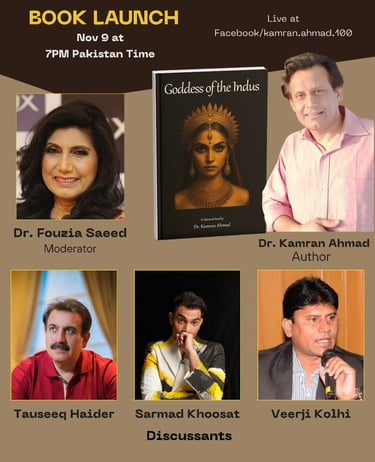
BOOK LAUNCH
Click to watch the recording
(in URDU)
BOOK REVIEWS
Dr. Qaiser Mukhtar (Goddess of the Indus and the Reimagining of an Ancient Civilization | NRI Pulse)
The Goddess of Indus, is a captivating read that is nothing short of mesmerizing
Dr. Kamran Ahmad's new book, Goddess of the Indus, is a captivating read that is nothing short of mesmerizing. One of the most striking aspects of the book is the emotional depth that he brings to his storytelling. While his earlier work focused on intellectual exploration and philosophical critique, this novel courageously dives into the realm of emotions and feelings. The way he intertwines history and myth with this newfound emotional richness is astonishing.
Set in the Indus Valley, The Goddess of Indus is a narrative that stems from the human heart, striking a remarkable balance between scholarship and poetry. Kamran retains his keen eye for historical detail while allowing emotions to guide the narrative. He surprises readers with the vulnerability of his characters, making them feel the loss, resistance, and hope that define their experiences. What was once a measured, analytical approach in Ahmad's work has now transformed into a vibrant canvas of imagery and emotion. This shift from detached observation to immersive storytelling is a testament to Ahmad's willingness to embrace intimacy, allowing readers to engage with the inner story rather than merely understand it.
The balance of scholarship and poetry in his narrative is sure to stimulate readers' intellect while also moving them emotionally. His new book not only informs but also deeply resonates, marking an inspiring new chapter in his literary voice. The Goddess of Indus is an outstanding addition to Kamran's literary legacy. Congratulations!
Awakening
Through a story of love, passion, honour and betrayal, "Goddess of the Indus" reflects on the past of a society, explains its present, and hints on how it may secure a better future. It shows "a more sacred way of being". Replete with gems of wisdom such as … "honour is not about what you do but why you do it… without heart there is no spirit, and without spirit, all you are left with is religion… ideologies are evil… the spirit is best expressed in art.." this novel reveals how a religion destroys the spirit and society. An essential step towards reawakening the spirit in the peoples of the Indus.
Dr Khadim Hussain (CRPDPK Book Review)
Healing through Goddess of the Indus
Goddess of the Indus is the one exquisite piece of great fictional art that I would like to suggest without any hesitation to anybody who wishes to discover deep rooted urge of collective identity running in the inner recesses of the unconscious for thousands of years in the South Asian regions, and to those who could dare to confront personal psychological inhibitions and suppressed pangs, regrets, guilt, desires and longings concealed in the inner chambers of heart. The novel by Dr. Kamran Ahmad has been published just recently by TWS Publications, Pakistan. The creative work exhibits rare creativity of heart touching themes and unusual skills of a great art.
Kamran Ahmad knows how to capture attention of readers till the end of the story through weaving events into a highly suspenseful story, using the symbols of Ambikshala and the Outlands skillfully—the former indicates the spirit while the latter demonstrates hierarchical structures of inflexible religious faiths and rigid social order. Set in the ancient Indian sub-continent when the fair-coloured Aryans had just climbed down from the mountains of Pamirs and Caucasus to the plains of the Indus Valley, the story of the novel carries seamless progression of events that rarely allows the reader to lose interest in the story and characters of the story. Dialectics of the physical world and internal frictions in the psychological depths of the characters of the novel do not only take the events forward to make a continuous flow of the plot of the novel but they also create a cathartic impact on the readers. Here is not just a story but a soft, sweet and soulful song of an artist that transcends the reader to an unseen world, an ancient world that resides in the unconscious, healing and resolving the inner wounds and conflicts of the reader on the way.
The novel explores unusual themes, mostly left untouched by scholars and artists, with unprecedented courage and confidence unpacking the origin of construction of the caste system in the Indus Valley. The invading Aryan hordes after subjugating the indigenous communities living with their indigenous life style that was largely in consonance with nature constructed a rigid, inflexible and hierarchical social and religious structure that distorted and polluted the life style of the indigenous communities. A wise Brahmin character of the novel, Indra, reveals that “this system serves to elevate the Arya—the Kshatriya and us (Brahmin)—into position of power and privilege and to subjugate the locals”. The superiority of the Arya was mostly justified through the skin colour—the fair-coloured Aryas as opposed to the dark-coloured indigenous people.
The other unusual theme that Kamran Ahmad treats with unwavering tenacity in the novel is the construction related to women’s bodies. When Gyani Baba (Simurgan), Syam and Jaavan were forced out of Ambikshala by circumstances, they had to face an unsettling reality that sexuality was considered dirty and shameful in the Outlands against the notion prevalent in Ambikshala where sexuality was considered sacred because it was a union of body and soul and was not used to control and manipulate others. In the words of Syam’s friend in the Outlands, Menaka “sexuality was always dirty and ugly for me. That is how it started for me. That is how it remained. And that is how I heard everybody talk about it…about sexuality as something dirty, as something to be ashamed of”.
Kamran Ahmad has dissected construction of the attachment of ‘shame’ and ‘honour’ to women bodies like a skilled surgeon with a sharp razor. The protagonist of the novel, Syam, sitting in the space created by Gyani Baba (Syam’s father) asserts: “as for connecting women bodies and their sexuality to honour and respect, I feel they are not real…notions of honour and respect are there to control women’s bodies and their sexuality”. “And to control their reproduction”, Gyani added. Explaining the phenomenon, Menaka reflects: “I always wonder about this obsession men in these lands have with their bloodlines and wanting to know that their children are really their children. Perhaps that is why they get the priests involved in marriage, sanctifying sex, which would otherwise remain an unholy and dirty affair”. With a gentle smile and distant look, she added, “with respect and honour connected to our bodies, our sexuality, and our reproduction, they do not have to guard us. We guard their bloodlines for them.” She laughed in a bitter sweet way”. The novel convincingly brings to light the guilt and regret caused by these notions and transformation of guilt and regret into virility of life expressed through arts like painting, music, dancing trance and poetry.
One of the highly significant and worth noting theme that Kamran Ahmad has dealt with in the novel is the conceptualisation of living in consonance with nature to create an earthly balance in contrast to hurting nature through the rigid, inflexible and hierarchical structure encompassed in texts and scriptures and justified through transcendental notions. Human agency to retore the balance has been underscored by rejecting the notion that exhorts “pull no threads, stir no pots”. The logical justification for the inflexible religiosity to bring “order” and stem “disorder” has been discerned to have been emanated from a lack of trust in human rationality and contemplative capacity.
Kamran Ahmad’s characters grow and evolve through their experiences of the dialectics of material world and through their individual psychological frictions, traumas and upheavals. The emotional and rational being of the protagonist, Syam, has been shaped by his mother Mehrani’s (mother goddess) closure to everything related to human connectivity, death of his son Pania and wife Matinga, and increasingly degenerating nature of the spirit of Ambikshala’s community life into rigid religiosity enshrined in scriptures and History Scroll. Mehrani, in turn, had been forced to close herself to nature due to her apparent guilt after rejecting Simurgan’s intense love and after silently disowning her son, Syam. Creative description of transformation of Mehrani, Menaka and Kamala in the novel after resolving their internal conflicts into authentic human personalities carries immense value of healing for the readers of the novel. Kamran Ahmad has, in this case, used his unique talent of a clinical psychologist to help mend broken and shattered personalities. He seems to have used the character of Shehrani (Sher Ma) as a tool for utilising his own spiritual and psychological qualities in this regard.
Kamran Ahmad’s heart-pounding and nail-biting story that suspends disbelief, his well-crafted plot, his round characterisation, his treatment of unusual and exotic themes, and his candid style and diction all have made Goddess of the Indus a must read for students and scholars of literature and social sciences.
(The writer is author, analyst and researcher based in Islamabad. He can be accessed at khadimhussainpajwak@gmail.com)
Amra Munawar (Amazon Review)
A beautifully crafted and deeply relevant novel
Goddess of the Indus is one of those rare novels that feels both ancient and startlingly contemporary. Set in the Indus Valley around 3,200 years ago, it unfolds at a moment when older earth-centred spiritual traditions are being reshaped, sometimes violently, by emerging hierarchies of purity, caste, and ritual. Yet this is not a historical lecture; Dr. Kamran Ahmad offers a profoundly human story carried by unforgettable characters.
What struck me most was how gracefully the novel moves between the ritual-bond world of Ambikshala and the vibrant yet harsh Outlands. Ambikshala’s devotion, purity laws, and sacred caves create awe, but they also reveal how power hides behind spiritual authority. The Outlands feel freer, alive with art, trade, and human interaction, yet they, too, are marked by caste, social injustice, and struggles for survival. The novel refuses to idealize either space: Ambikshala’s ritual purity becomes a mechanism of control, while the Outlands’ cultural richness remains shaped by caste and structural injustice. This duality mirrors our own world, sacred or secular, where hierarchy persists, but so does the possibility of renewal.
The novel’s imagery is breathtaking. Mountains, moonlit rituals, sanctum caves, and textured marketplaces live on the page as if the land itself were a character. These scenes carry the emotional weight of the story: its grief, longing, tenderness, and its reclamation of the sacred.
This is a novel that lingers long after reading, a powerful, immersive journey that connects us to the forgotten pages of our history and to the enduring human search for meaning.
SHORT VIDEO CLIPS
Sarmad Khoosat
One of Pakistan's leading Filmmakers
(From the Launch)


Dr Khalida Nasim (HumSub Online Magazine)
کچھ ناول کہانیاں سناتے ہیں، اور کچھ ناول ہمیں ہماری اپنی بھولی ہوئی روح سے ملواتے ہیں۔ Goddess of the Indus دوسری قسم کا ناول ہے۔ ایک ایسا بیانیہ جو قاری کو صرف ماضی میں نہیں لے جاتا بلکہ اس کے باطن میں اتر جاتا ہے۔
یہ ڈاکٹر کامران احمد ایک گہرا، فکری اور اثر انگیز تاریخی ناول ہے جو قاری کو ایک ایسی قدیم تہذیب میں لے جاتا ہے جو روحانی اور سماجی تبدیلی کے ایک نازک مرحلے سے گزر رہی ہے۔ وادی سندھ کے قدیم تہذیب کے پس منظر میں ترتیب دی گئی یہ کہانی اساطیر، تاریخ اور انسانی جذبات کو نہایت خوبصورتی سے یکجا کرتی ہے۔ اور ایک ایسے عہد کو زندہ کرتی ہے جب تقدس زندگی سے جدا نہ تھا۔ جب روحانیت عبادت گاہوں تک محدود نہیں تھی بلکہ روزمرہ کے معمولات میں سانس لیتی تھی۔ وادی سندھ کی فضا میں مٹی کی خوشبو ہے، رسموں کی خاموشی ہے، اور ایک ایسا نسوانی تقدس ہے جو زمین اور انسان کے درمیان ایک مقدس رشتہ قائم رکھتا ہے۔
ڈاکٹر کامران احمد کا روحانیت سے وابستہ پس منظر اس کتاب کی فکری گہرائی میں نمایاں ہے۔ کردار علامتی ہونے کے باوجود کسی بھی دور کے انسان سے قریب محسوس ہوتے ہیں۔ خصوصاً اس انداز میں جس طرح وہ تبدیلی، طاقت اور شناخت کے سوالات سے نبرد آزما ہوتے ہیں۔
اس ناول کی سب سے گہری تاثیر اس کا جذباتی سچ ہے۔ بعض مقامات پر غور و فکر سے بھرپور اقتباسات قاری سے ٹھہر کر پڑھنے کا تقاضا کرتے ہیں۔ جیسا کہ ایک جگہ لکھتے ہیں۔
“A heart that cannot feel pain cannot feel ecstasy either… It does not know the spirit”
یہ سطور محض ایک فرد کی کیفیت نہیں بیان کرتیں بلکہ ایک تہذیب کے زوال کا استعارہ بن جاتی ہیں۔ جب طاقت نرمی اور حکمت سے خالی ہو جائے، جب روحانیت کو قلوب اور اختیار کی دیواروں میں قید کر دیا جائے، تو دل رفتہ رفتہ سن ہو جاتا ہے۔ اور سن ہوتا ہوا دل نہ مسرت جانتا ہے نہ جذبہ، اور نہ روح کو پہچانتا ہے۔
ناول میں روایتی مذہبی علامتوں اور زندہ روحانیت کے درمیان ایک معنی خیز تقابل موجود ہے۔ ایک طرف روایت کی مضبوط مگر جامد ساختیں ہیں، اور دوسری طرف وہ آزاد، رواں اور بے نام روح جو کسی لیبل کی محتاج نہیں۔ جیسا کہ ایک مقام پر کہا گیا ہے۔
“The spirit must breathe free of all labels and forms.”
یہ جملہ پورے بیانیے کا مرکزی استعارہ محسوس ہوتا ہے۔ روح اگر سانس لینا چھوڑ دے تو معاشرہ محض ڈھانچہ رہ جاتا ہے۔ یہی وہ لمحہ ہے جب انسانی ضمیر طاقت کے مسلط کردہ ہتھکنڈوں سے بیزار ہونے لگتا ہے۔ یہ بغاوت شور نہیں مچاتی، مگر اندر ہی اندر ایک اخلاقی بیداری کو جنم دیتی ہے۔
ایک اور فکر انگیز اقتباس ناول کی روح کو مزید واضح کرتا ہے۔
“Perhaps it is better to let the spirit reveal itself in our everyday lives… Maybe that is why the spirit is best expressed in art, music, dance….”
یہاں مصنف ہمیں یاد دلاتے ہیں کہ روحانیت کا سب سے سچا اظہار زندگی کے سادہ اور بے ساختہ لمحوں میں ہوتا ہے۔ فن میں، محبت میں، رقص اور موسیقی میں۔ شاید اسی لیے ناول میں محبت محض ایک رومانوی جذبہ نہیں بلکہ ایک روحانی کیفیت ہے۔ وفا، وابستگی اور باطنی اتصال کی صورت۔
مجھے اس کہانی میں سب سے زیادہ جس پہلو نے متاثر کیا وہ طاقت اور محبت کے درمیان تناؤ تھا۔ محبت تعمیر کرتی ہے، طاقت اگر بے لگام ہو تو تخریب کا استعارہ بنتی ہے۔ اور جب طاقت تقدس پر غالب آتی ہے تو تہذیبیں باہر سے نہ سہی اندر سے ضرور ٹوٹتی ہیں۔
میں ڈاکٹر کامران احمد کو اس خوبصورت ناول کی تخلیق پر مبارکباد دیتی ہوں۔ یہ قارئین کے لئے یقیناً ایک تفکر اور بصیرت آموز تحفہ ہے۔ خاص طور اُن قارئین کے لیے جو قدیم ثقافتوں، روحانی موضوعات اور ایسے بیانیے پسند کرتے ہیں جو سوچ اور فکر کی دعوت دیتے ہیں۔


"Indus Valley Civilization belongs to India or Pakistan?"
SAMAA TV Interview
with Absar Alam
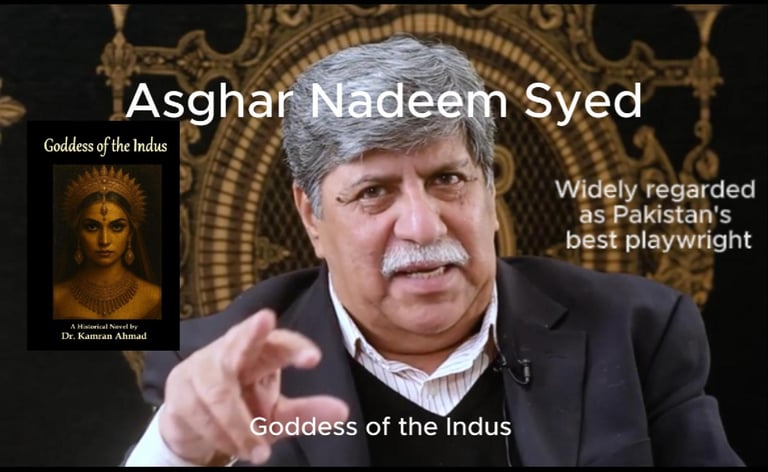
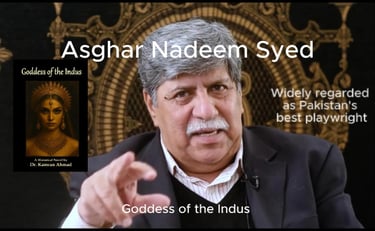
Asghar Nadeem Syed
One of Pakistan's leading Playwrights


VOA
Coverage of the talk at The World Bank


"Immanent Spirituality
of the Indus Valley"
PTV Interview


"How Spirituality
Deteriorates into Religiosity"
HUM TV Interview

